29.SpringSecurity-令牌配置

文章目录
前言
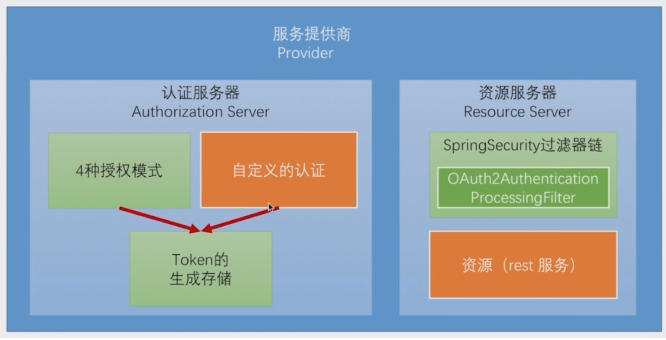
- 到目前为止,我们已经把自定义的3种方式嫁接到认证服务器上,通过这种方式我们可以了发送OAuth令牌。目前token的生成和存储是按照Spring默认的一套机制运作。但是这种默认的机制并不符合我们的需求。
- 从这一节开始我们看一下对Token处理的相关知识点。怎样定制这个token,怎样生成和存储这个token。
- 我们主要讲解3个基本点:
a.基本的Token参数配置
b.使用JWT替换默认的Token
c.扩展和解析JWT的信息
内容
1.基本的Token参数配置
我们之前的token生成处理都是在Authentication Server里面做的处理。 首先我们需要修改我们之前定义的Authentication Server:MyAuthorizationServerConfig之前是使用注解@EnableAuthorizationServer开启默认的Spring Security OAuth的默认配置。我们现在继承:AuthorizationServerConfigurerAdapter,其有针对3个不同的默认的配置:
AuthorizationServerEndpointsConfigurer:端点配置
ClientDetailsServiceConfigurer:针对于第三方客户端配置;所谓的客户端就是有哪些应用会访问我们的系统,我们的认证服务器会决定给哪些第三方应用client去发送令牌。如果这个配置后我们之前配置文件中配置的clientId和clientSecret将不会起作用了 AuthorizationServerSecurityConfigurer:针对于安全性配置
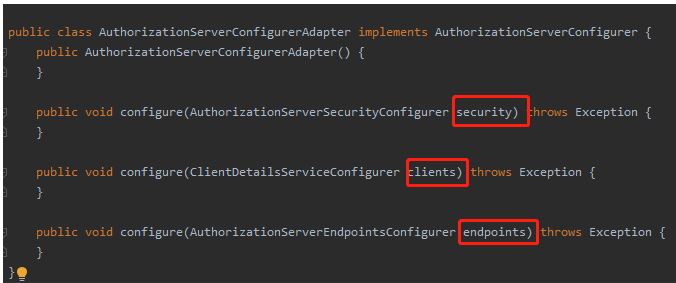
之前我们进行认证时候,发送的/oauth/token请求恰好是发送到TokenEndpoint(他是处理我们oauth请求的);AuthorizationServerEndpointsConfigurer的配置其实就是针对于TokenEndpoint做一些端点配置。对AuthorizationServerEndpointsConfigurer进行配置时候,需要有对象:AuthenticationManager、UserDetailsService。我们自己不定义配置AuthorizationServerEndpointsConfigurer的时候,系统会默认去应用找到其对应的属性:AuthenticationManager、UserDetailsService;当我们想使用自己的逻辑时候,将其属性设置成我们自己定义的bean 自己覆盖其配置。
@Configuration
@EnableAuthorizationServer
public class MyAuthorizationServerConfig extends AuthorizationServerConfigurerAdapter {
    @Autowired
    private AuthenticationManager authenticationManager;

    @Autowired
    private UserDetailsService userDetailsService;

    @Override
    public void configure(AuthorizationServerEndpointsConfigurer endpoints) throws Exception {
        /**
         * 系统端点配置:endpoints
         * 1.使用我们自己的授权管理器(AuthenticationManager)和自定义的用户详情服务(UserDetailsService)
         */
         endpoints.authenticationManager(authenticationManager)
                 .userDetailsService(userDetailsService);
    }

    @Override
    public void configure(ClientDetailsServiceConfigurer clients) throws Exception {
        /**
         * 系统第三方客户端配置:
         * 所谓的客户端就是有哪些应用会访问我们的系统,
         * 我们的认证服务器会决定给哪些第三方应用client去发送令牌。
         * 如果这个配置后我们之前配置文件中配置的clientId和clientSecret将不会起作用了
         */
        //目前我们的应用场景是在我们的app和我们的前端;我们不允许第三方来注册,所以用内存
        clients.inMemory().withClient("yxm")
                .secret("yxmsecret")
                .accessTokenValiditySeconds(7200)//发出去的令牌,有效期是多少? 这里设置为2小时
                .authorizedGrantTypes("refresh_token","password")//针对当前应用客户端:yxm,所能支持的授权模式是哪些?之前设置有4种类加上刷新总共5种:这里只支持配置的:"refresh_token","password"。
                .scopes("all","read","write");//发出去的权限有哪些?之前前端请求携带了scoope,此配置的scope用来指定前端发送scope的值必须在配置的里面或者不携带scope;默认为此处配置的scope
    }
}
然后我们重启服务:尝试下发送请求的效果.
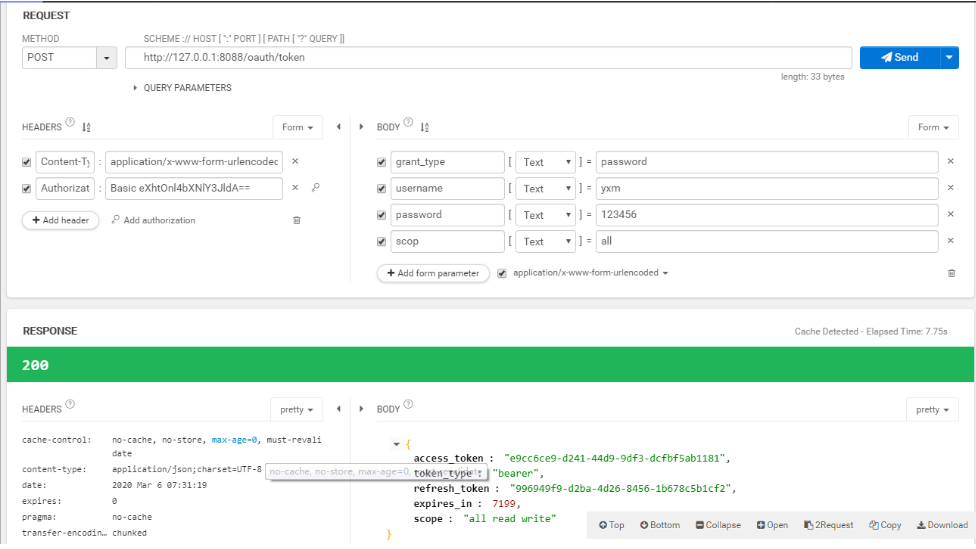
返回结果中:expires_in是7199,恰好是我们配置的7200s之内。
scope返回的是我们client端配置的:"all read write"
{
"access_token": "e9cc6ce9-d241-44d9-9df3-dcfbf5ab1181",
"token_type": "bearer",
"refresh_token": "996949f9-d2ba-4d26-8456-1b678c5b1cf2",
"expires_in": 7199,
"scope": "all read write"
}
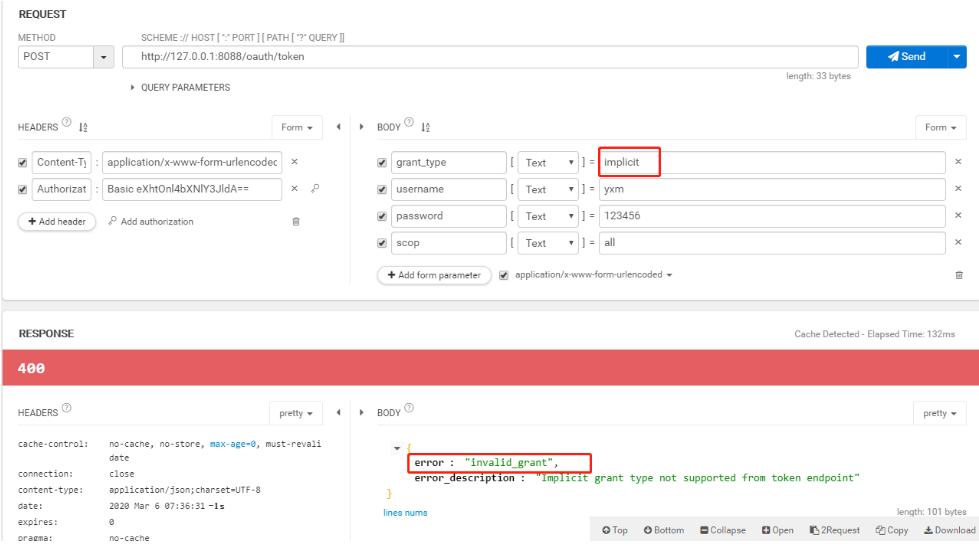
针对于client端配置的:authorizedGrantTypes("refresh_token","password")
我们尝试使用:implicit
我们发送下:scope在客户端不存在的类型:xxx 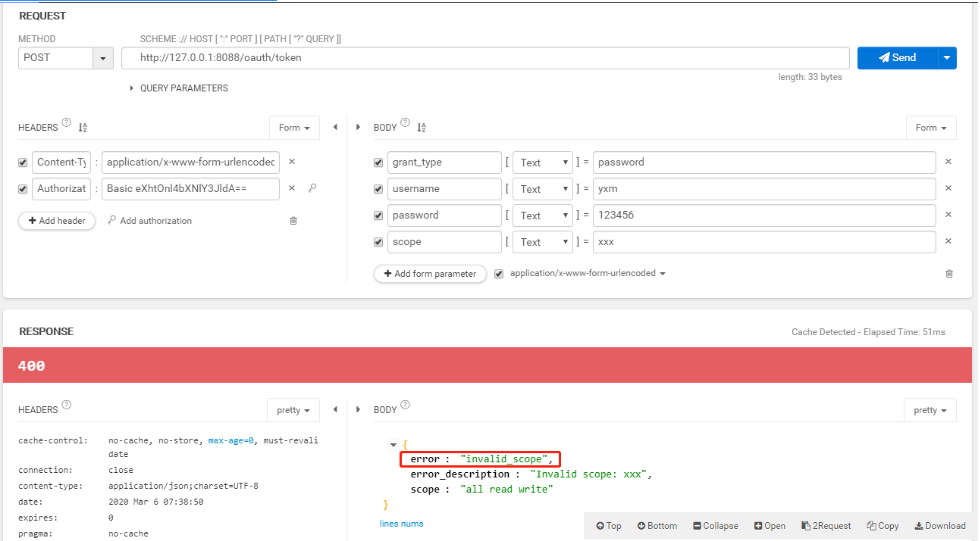
我们不发送scope 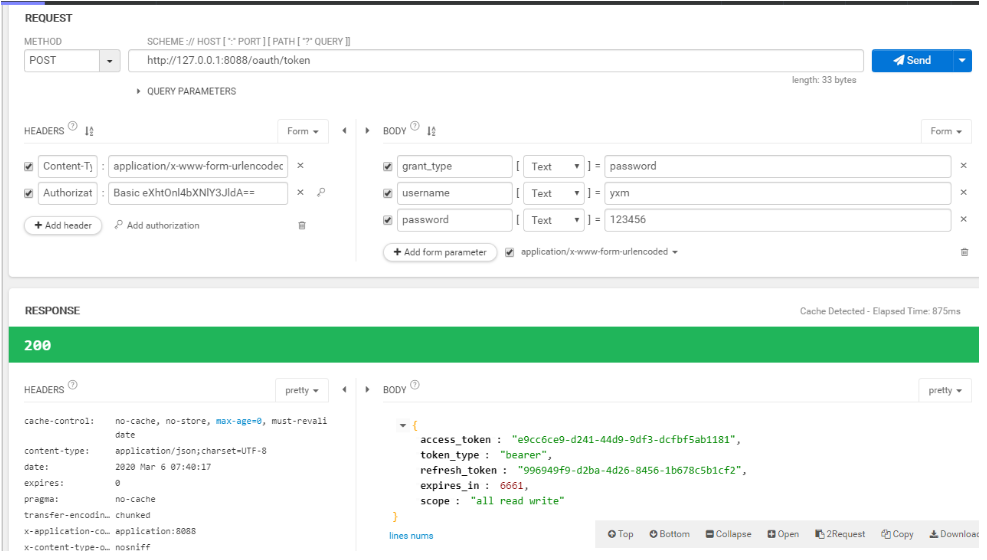
如果我们除了给yxm对应的client端授权外,我们还需要给其他客户端授权。直接在后面加上and拼接即可。 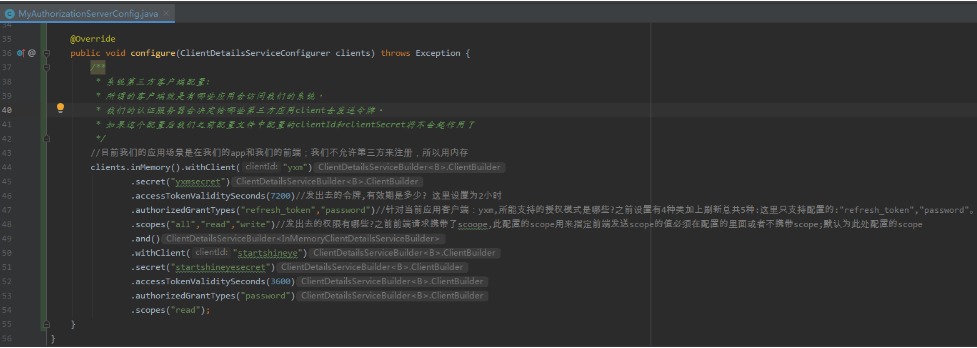
但是又回到我们之前说的呢?我们这个模块应该是通用的模块,只需要配置即可实现接入。
OAuth2ClientProperties
public class OAuth2ClientProperties {
    //我们把:ClientDetailsServiceConfigurer相关配置加进来
    private String clientId;
    private String clientSecret;
    private int accessTokenValiditySeconds;

    public String getClientId() {
        return clientId;
    }

    public void setClientId(String clientId) {
        this.clientId = clientId;
    }

    public String getClientSecret() {
        return clientSecret;
    }

    public void setClientSecret(String clientSecret) {
        this.clientSecret = clientSecret;
    }

    public int getAccessTokenValiditySeconds() {
        return accessTokenValiditySeconds;
    }

    public void setAccessTokenValiditySeconds(int accessTokenValiditySeconds) {
        this.accessTokenValiditySeconds = accessTokenValiditySeconds;
    }
}
OAuth2Properties:
public class OAuth2Properties {
    private OAuth2ClientProperties[] clients = {};//默认空数组

    public OAuth2ClientProperties[] getClients() {
        return clients;
    }

    public void setClients(OAuth2ClientProperties[] clients) {
        this.clients = clients;
    }
}
然后将其加入到security的配置下去:SecurityProperties
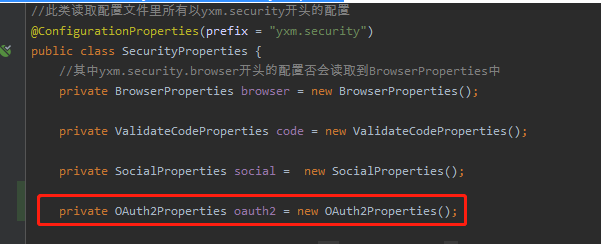
此时我们去除demo里面之前的默认的spring security oauth2客户端配置,改为对应的配置。
#security:
#    oauth2:
#      client:
#        clientId: yxm
#        client_secret: yxmsecret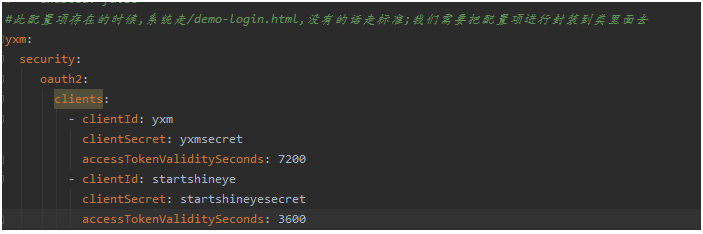
认证服务器里面修改成配置:
@Configuration
@EnableAuthorizationServer
public class MyAuthorizationServerConfig extends AuthorizationServerConfigurerAdapter {
    @Autowired
    private AuthenticationManager authenticationManager;

    @Autowired
    private UserDetailsService userDetailsService;

    @Autowired
    private SecurityProperties securityProperties;

    @Override
    public void configure(AuthorizationServerEndpointsConfigurer endpoints) throws Exception {
        /**
         * 系统端点配置:endpoints
         * 1.使用我们自己的授权管理器(AuthenticationManager)和自定义的用户详情服务(UserDetailsService)
         */
         endpoints.authenticationManager(authenticationManager)
                 .userDetailsService(userDetailsService);
    }

    @Override
    public void configure(ClientDetailsServiceConfigurer clients) throws Exception {
        /**
         * 系统第三方客户端配置:
         * 所谓的客户端就是有哪些应用会访问我们的系统,
         * 我们的认证服务器会决定给哪些第三方应用client去发送令牌。
         * 如果这个配置后我们之前配置文件中配置的clientId和clientSecret将不会起作用了
         */
        //目前我们的应用场景是在我们的app和我们的前端;我们不允许第三方来注册,所以用内存
       /* clients.inMemory().withClient("yxm")
                .secret("yxmsecret")
                .accessTokenValiditySeconds(7200)//发出去的令牌,有效期是多少? 这里设置为2小时
                .authorizedGrantTypes("refresh_token","password")//针对当前应用客户端:yxm,所能支持的授权模式是哪些?之前设置有4种类加上刷新总共5种:这里只支持配置的:"refresh_token","password"。
                .scopes("all","read","write")//发出去的权限有哪些?之前前端请求携带了scoope,此配置的scope用来指定前端发送scope的值必须在配置的里面或者不携带scope;默认为此处配置的scope
                .and()
                .withClient("startshineye")
                .secret("startshineyesecret")
                .accessTokenValiditySeconds(3600)
                .authorizedGrantTypes("password")
                .scopes("read");*/
        InMemoryClientDetailsServiceBuilder builder = clients.inMemory();
        if(ArrayUtils.isNotEmpty(securityProperties.getOauth2().getClients())) {//判断我们的配置是否为空
            for (OAuth2ClientProperties client:securityProperties.getOauth2().getClients()){
                builder.withClient(client.getClientId())
                        .secret(client.getClientSecret())
                        .accessTokenValiditySeconds(client.getAccessTokenValiditySeconds())
                        .authorizedGrantTypes("refresh_token", "authorization_code", "password")
                        .scopes("all");
            }
        }
    }
}
我们现在使用第二次配置:startshineye,并将其accessTokenValiditySeconds配置

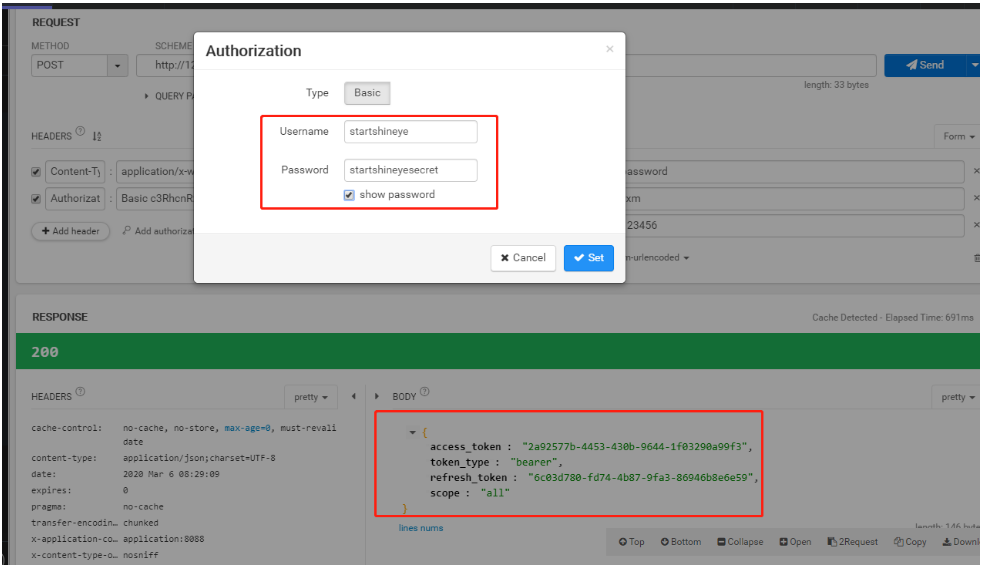
我们现在使用第二次配置:startshineye,并将其accessTokenValiditySeconds不配置,返回的json对象中没有令牌:
2.令牌存储
我们现在的令牌是存储到内存中的,一旦我们服务重启的话。内存中的令牌就丢失了,所以我们需要将令牌存储到持久化的数据库或者redis中,由于令牌是访问比较频繁的,所以我们将其配置到redis中。使用redis你不用去维护表的结构并且过期时间自动设置且性能比数据库快很多。
我们之前将到过TokenStore,他是用来负责令牌的存取,现在我们写一个TokenStoreConfig配置类。
@Configuration
public class TokenStoreConfig {
    @Autowired
    private RedisConnectionFactory redisConnectionFactory;

    @Bean
    public TokenStore redisTokenStore(){
      return new RedisTokenStore(redisConnectionFactory);
    }
}
在我们的认证服务器上引入自定义TokenStore:
@Configuration
@EnableAuthorizationServer
public class MyAuthorizationServerConfig extends AuthorizationServerConfigurerAdapter {
    @Autowired
    private AuthenticationManager authenticationManager;

    @Autowired
    private UserDetailsService userDetailsService;

    @Autowired
    private SecurityProperties securityProperties;

    @Autowired
    private TokenStore redisTokenStore;

    @Override
    public void configure(AuthorizationServerEndpointsConfigurer endpoints) throws Exception {
        /**
         * 系统端点配置:endpoints
         * 1.使用我们自己的授权管理器(AuthenticationManager)和自定义的用户详情服务(UserDetailsService)
         */
         endpoints.tokenStore(redisTokenStore)
                 .authenticationManager(authenticationManager)
                 .userDetailsService(userDetailsService);
    }

    @Override
    public void configure(ClientDetailsServiceConfigurer clients) throws Exception {
        /**
         * 系统第三方客户端配置:
         * 所谓的客户端就是有哪些应用会访问我们的系统,
         * 我们的认证服务器会决定给哪些第三方应用client去发送令牌。
         * 如果这个配置后我们之前配置文件中配置的clientId和clientSecret将不会起作用了
         */
        //目前我们的应用场景是在我们的app和我们的前端;我们不允许第三方来注册,所以用内存
        InMemoryClientDetailsServiceBuilder builder = clients.inMemory();
        if(ArrayUtils.isNotEmpty(securityProperties.getOauth2().getClients())) {//判断我们的配置是否为空
            for (OAuth2ClientProperties client:securityProperties.getOauth2().getClients()){
                builder.withClient(client.getClientId())
                        .secret(client.getClientSecret())
                        .accessTokenValiditySeconds(client.getAccessTokenValiditySeconds())
                        .authorizedGrantTypes("refresh_token", "authorization_code", "password")
                        .scopes("all");
            }
        }
    }
}
测试:
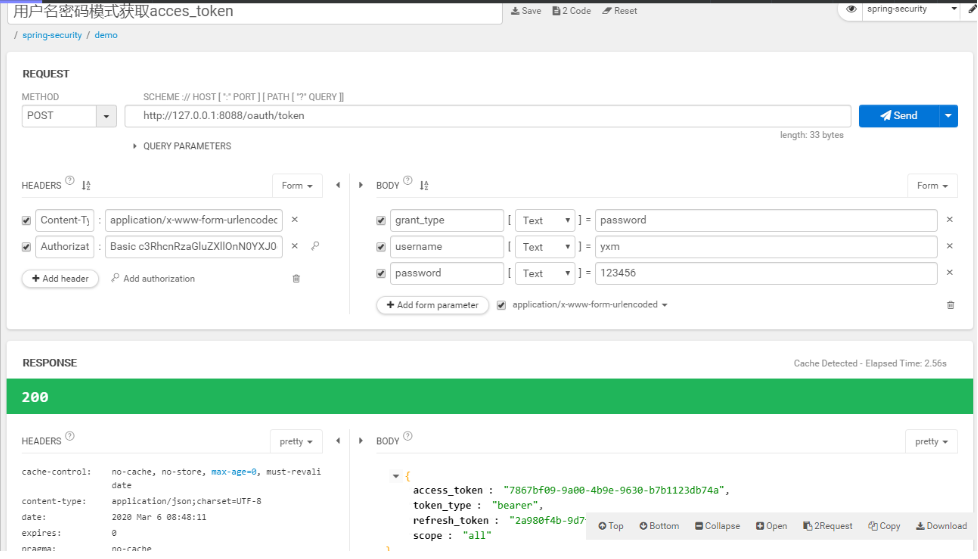
我们从redis里面可以查看到对应的信息。 
评论
登录后参与技术讨论,分享你的经验与见解。
登录 / 注册暂无评论