【源码解析】通过探究Autowried注解在Spring中的实现原理,对bean生命周期的探究

文章目录
@AutoWried注解的实现于AutowiredAnnotationBeanPostProcessor类,而该类继承于InstantiationAwareBeanPostProcessorAdapter,这个类是SmartInstantiationAwareBeanPostProcessor接口的一个默认实现的抽象类,当我们要使用SmartInstantiationAwareBeanPostProcessor接口时应该优先继承于这个适配器类。SmartInstantiationAwareBeanPostProcessor接口又继承了InstantiationAwareBeanPostProcessor接口,InstantiationAwareBeanPostProcessor接口继承了BeanPostProcessor接口。InstantiationAwareBeanPostProcessor和BeanPostProcessor是两个spring的核心接口。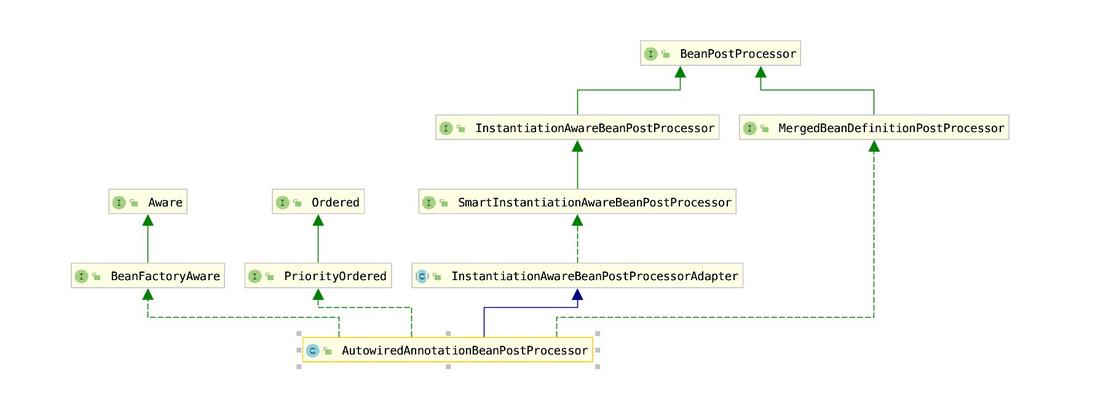 而SmartInstantiationAwareBeanPostProcessor则是一个相对特殊的接口。
首先介绍BeanPostProcessor接口
    @Nullable
    default Object postProcessBeforeInitialization(Object bean, String beanName) throws BeansException {
        return bean;
    }


    @Nullable
    default Object postProcessAfterInitialization(Object bean, String beanName) throws BeansException {
        return bean;
    }
spring会在一个bean初始化前和初始化后调用这个接口,分别对应before和after两个方法,所谓初始化,即是在bean对象各个property加载完成之后执行的初始化方法(如果bean实现了InitializingBean接口,则会执行该接口的afterPropertiesSet()方法,在bean标签中指出的init-method方法,和注解配置的初始化方法)。
下面详细介绍这个接口何时被注入到核心容器以及何时执行这个接口的方法。从核心容器的入口AbstractApplicationContext的refresh方法入手,可以看出Spring对各个bean的加载的时机的区分。postProcessBeanFactory接口们的加载-》postProcessBeanFactory的的处理执行-》BeanPostProcessors的加载-》特殊bean的加载-》非延迟加载的单例bean加载
 @Override
 public void refresh() throws BeansException, IllegalStateException {
     synchronized (this.startupShutdownMonitor) {
         // Prepare this context for refreshing.
         prepareRefresh();

         // Tell the subclass to refresh the internal bean factory.
         ConfigurableListableBeanFactory beanFactory = obtainFreshBeanFactory();

         // Prepare the bean factory for use in this context.
         prepareBeanFactory(beanFactory);

         try {
             // Allows post-processing of the bean factory in context subclasses.
             postProcessBeanFactory(beanFactory);

             // Invoke factory processors registered as beans in the context.
             invokeBeanFactoryPostProcessors(beanFactory);

             // Register bean processors that intercept bean creation.
             //对BeanPostProcessors的bean加载
             registerBeanPostProcessors(beanFactory);

             // Initialize message source for this context.
             initMessageSource();

             // Initialize event multicaster for this context.
             initApplicationEventMulticaster();

             // Initialize other special beans in specific context subclasses.
             onRefresh();

             // Check for listener beans and register them.
             registerListeners();

             // Instantiate all remaining (non-lazy-init) singletons.
             finishBeanFactoryInitialization(beanFactory);

             // Last step: publish corresponding event.
             finishRefresh();
         }
接下来关注registerBeanPostProcessors方法的调用
    protected void registerBeanPostProcessors(ConfigurableListableBeanFactory beanFactory) {
        PostProcessorRegistrationDelegate.registerBeanPostProcessors(beanFactory, this);
    }
在接下来看PostProcessorRegistrationDelegate静态类提供的这个方法
public static void registerBeanPostProcessors(
        ConfigurableListableBeanFactory beanFactory, AbstractApplicationContext applicationContext) {

    String[] postProcessorNames = beanFactory.getBeanNamesForType(BeanPostProcessor.class, true, false);

    // Register BeanPostProcessorChecker that logs an info message when
    // a bean is created during BeanPostProcessor instantiation, i.e. when
    // a bean is not eligible for getting processed by all BeanPostProcessors.
    int beanProcessorTargetCount = beanFactory.getBeanPostProcessorCount() + 1 + postProcessorNames.length;
    beanFactory.addBeanPostProcessor(new BeanPostProcessorChecker(beanFactory, beanProcessorTargetCount));

    // Separate between BeanPostProcessors that implement PriorityOrdered,
    // Ordered, and the rest.
    List<BeanPostProcessor> priorityOrderedPostProcessors = new ArrayList<>();
    List<BeanPostProcessor> internalPostProcessors = new ArrayList<>();
    List<String> orderedPostProcessorNames = new ArrayList<>();
    List<String> nonOrderedPostProcessorNames = new ArrayList<>();
    for (String ppName : postProcessorNames) {
        if (beanFactory.isTypeMatch(ppName, PriorityOrdered.class)) {
            BeanPostProcessor pp = beanFactory.getBean(ppName, BeanPostProcessor.class);
            priorityOrderedPostProcessors.add(pp);
            if (pp instanceof MergedBeanDefinitionPostProcessor) {
                internalPostProcessors.add(pp);
            }
        }
        else if (beanFactory.isTypeMatch(ppName, Ordered.class)) {
            orderedPostProcessorNames.add(ppName);
        }
        else {
            nonOrderedPostProcessorNames.add(ppName);
        }
    }

    // First, register the BeanPostProcessors that implement PriorityOrdered.
    sortPostProcessors(priorityOrderedPostProcessors, beanFactory);
    registerBeanPostProcessors(beanFactory, priorityOrderedPostProcessors);

    // Next, register the BeanPostProcessors that implement Ordered.
    List<BeanPostProcessor> orderedPostProcessors = new ArrayList<>();
    for (String ppName : orderedPostProcessorNames) {
        BeanPostProcessor pp = beanFactory.getBean(ppName, BeanPostProcessor.class);
        orderedPostProcessors.add(pp);
        if (pp instanceof MergedBeanDefinitionPostProcessor) {
            internalPostProcessors.add(pp);
        }
    }
    sortPostProcessors(orderedPostProcessors, beanFactory);
    registerBeanPostProcessors(beanFactory, orderedPostProcessors);

    // Now, register all regular BeanPostProcessors.
    List<BeanPostProcessor> nonOrderedPostProcessors = new ArrayList<>();
    for (String ppName : nonOrderedPostProcessorNames) {
        BeanPostProcessor pp = beanFactory.getBean(ppName, BeanPostProcessor.class);
        nonOrderedPostProcessors.add(pp);
        if (pp instanceof MergedBeanDefinitionPostProcessor) {
            internalPostProcessors.add(pp);
        }
    }
    registerBeanPostProcessors(beanFactory, nonOrderedPostProcessors);

    // Finally, re-register all internal BeanPostProcessors.
    sortPostProcessors(internalPostProcessors, beanFactory);
    registerBeanPostProcessors(beanFactory, internalPostProcessors);

    // Re-register post-processor for detecting inner beans as ApplicationListeners,
    // moving it to the end of the processor chain (for picking up proxies etc).
    beanFactory.addBeanPostProcessor(new ApplicationListenerDetector(applicationContext));
}
忽略细节,本质上用beanFactory调用getBean方法,将这些
BeanPostProcessor加载到核心容器,最后再加入beanFactory的一个专门放BeanPostProcessor对象的一个列表里。这就完成了对BeanPostProcessor对象的加载。那spring是什么时候调用这个接口的两个方法的呢?
AbstractAutowireCapableBeanFactory的initializeBean方法给出了答案
    protected Object initializeBean(final String beanName, final Object bean, @Nullable RootBeanDefinition mbd) {
        if (System.getSecurityManager() != null) {
            AccessController.doPrivileged((PrivilegedAction<Object>) () -> {
                invokeAwareMethods(beanName, bean);
                return null;
            }, getAccessControlContext());
        }
        else {
            invokeAwareMethods(beanName, bean);
        }

        Object wrappedBean = bean;
        if (mbd == null || !mbd.isSynthetic()) {
        //初始化前置调用
            wrappedBean = applyBeanPostProcessorsBeforeInitialization(wrappedBean, beanName);
        }

        try {
            invokeInitMethods(beanName, wrappedBean, mbd);//调用bean的初始化
        }
        catch (Throwable ex) {
            throw new BeanCreationException(
                    (mbd != null ? mbd.getResourceDescription() : null),
                    beanName, "Invocation of init method failed", ex);
        }
        if (mbd == null || !mbd.isSynthetic()) {
        //初始化后置调用
            wrappedBean = applyBeanPostProcessorsAfterInitialization(wrappedBean, beanName);
        }

        return wrappedBean;
    }
可以看到applyBeanPostProcessorsBeforeInitialization其实就是对beanFactory里的beanProcessor列表进行遍历,挨个使用列表中的对象进行前置方法的调用
    @Override
    public Object applyBeanPostProcessorsBeforeInitialization(Object existingBean, String beanName)
            throws BeansException {

        Object result = existingBean;
        for (BeanPostProcessor beanProcessor : getBeanPostProcessors()) {
            Object current = beanProcessor.postProcessBeforeInitialization(result, beanName);
            if (current == null) {
                return result;
            }
            result = current;
        }
        return result;
    }
要点小结
1.何时加载BeanPostProcessor对象:在refresh方法里,在PostProcessBeanFactory对象们完成处理后,通过beanFactory的getBean方法完成加载之后放入beanFactory的一个list中。
2.何时调用:在对每个bean进行初始化调用前后会遍历list中的BeanPostProcessor对象挨个对这个bean进行处理。
理解了BeanPostProcessor接口后,接下来聊聊其子接口InstantiationAwareBeanPostProcessor,这个接口比BeanPostProcessor就多了三个方法,可以说是BeanPostProcessor的加强版。postProcessBeforeInstantiation和postProcessAfterInstantiation分别在bean实例化(构造方法调用)前后调用。而postProcessPropertyValues在实例化之后在属性注入之前调用。我们应该在bean的实例化的代码中去找这个接口调用的时机。
   @Nullable
   default Object postProcessBeforeInstantiation(Class<?> beanClass, String beanName) throws BeansException {
       return null;
   }
   default boolean postProcessAfterInstantiation(Object bean, String beanName) throws BeansException {
       return true;
   }


   @Nullable
   default PropertyValues postProcessPropertyValues(
           PropertyValues pvs, PropertyDescriptor[] pds, Object bean, String beanName) throws BeansException {

       return pvs;
   }
在AbstractAutowireCapableBeanFactory类的createBean中找到了实例化前置处理方法的调用
    protected Object createBean(String beanName, RootBeanDefinition mbd, @Nullable Object[] args)
            throws BeanCreationException {

        if (logger.isDebugEnabled()) {
            logger.debug("Creating instance of bean '" + beanName + "'");
        }
        RootBeanDefinition mbdToUse = mbd;

        // Make sure bean class is actually resolved at this point, and
        // clone the bean definition in case of a dynamically resolved Class
        // which cannot be stored in the shared merged bean definition.
        Class<?> resolvedClass = resolveBeanClass(mbd, beanName);
        if (resolvedClass != null && !mbd.hasBeanClass() && mbd.getBeanClassName() != null) {
            mbdToUse = new RootBeanDefinition(mbd);
            mbdToUse.setBeanClass(resolvedClass);
        }

        // Prepare method overrides.
        try {
            mbdToUse.prepareMethodOverrides();
        }
        catch (BeanDefinitionValidationException ex) {
            throw new BeanDefinitionStoreException(mbdToUse.getResourceDescription(),
                    beanName, "Validation of method overrides failed", ex);
        }

        try {
            // Give BeanPostProcessors a chance to return a proxy instead of the target bean instance.
            //这一行进行调用
            Object bean = resolveBeforeInstantiation(beanName, mbdToUse);
            if (bean != null) {
                return bean;
            }
        }
        catch (Throwable ex) {
            throw new BeanCreationException(mbdToUse.getResourceDescription(), beanName,
                    "BeanPostProcessor before instantiation of bean failed", ex);
        }

        try {
            Object beanInstance = doCreateBean(beanName, mbdToUse, args);
            if (logger.isDebugEnabled()) {
                logger.debug("Finished creating instance of bean '" + beanName + "'");
            }
            return beanInstance;
        }
        catch (BeanCreationException ex) {
            // A previously detected exception with proper bean creation context already...
            throw ex;
        }
        catch (ImplicitlyAppearedSingletonException ex) {
            // An IllegalStateException to be communicated up to DefaultSingletonBeanRegistry...
            throw ex;
        }
        catch (Throwable ex) {
            throw new BeanCreationException(
                    mbdToUse.getResourceDescription(), beanName, "Unexpected exception during bean creation", ex);
        }
    }
这个方法就是前置调用的关键,再交由由applyBeanPostProcessorsBeforeInstantiation方法处理,这个方法遍历list,判断BeanPostProcessor的类型是不是
InstantiationAwareBeanPostProcessor的对象,如果是就调用前置处理。
    @Nullable
    protected Object resolveBeforeInstantiation(String beanName, RootBeanDefinition mbd) {
        Object bean = null;
        if (!Boolean.FALSE.equals(mbd.beforeInstantiationResolved)) {
            // Make sure bean class is actually resolved at this point.
            if (!mbd.isSynthetic() && hasInstantiationAwareBeanPostProcessors()) {
                Class<?> targetType = determineTargetType(beanName, mbd);
                if (targetType != null) {
                    bean = applyBeanPostProcessorsBeforeInstantiation(targetType, beanName);
                    if (bean != null) {
                        bean = applyBeanPostProcessorsAfterInitialization(bean, beanName);
                    }
                }
            }
            mbd.beforeInstantiationResolved = (bean != null);
        }
        return bean;
    }
@Nullable
protected Object applyBeanPostProcessorsBeforeInstantiation(Class<?> beanClass, String beanName) {
for (BeanPostProcessor bp : getBeanPostProcessors()) {
if (bp instanceof InstantiationAwareBeanPostProcessor) {
InstantiationAwareBeanPostProcessor ibp = (InstantiationAwareBeanPostProcessor) bp;
Object result = ibp.postProcessBeforeInstantiation(beanClass, beanName);
if (result != null) {
return result;
}
}
}
return null;
}如果前置方法没有返回bean对象,那么将继续执行正常流程,进行bean对象的实例化也就是doCreateBean方法。而这个方法完成对bean的实例化,之后调用AbstractAutowireCapableBeanFactory的populateBean方法,这个方法就是对实例化后的bean进行property加载执行后置方法-》autowired-》postProcessPropertyValues方法调用(这个是注解autowired的实现,属性和方法,而构造方法的autowired注解实现在另一个地方)-》其他普通属性注入
    protected void populateBean(String beanName, RootBeanDefinition mbd, @Nullable BeanWrapper bw) {
        if (bw == null) {
            if (mbd.hasPropertyValues()) {
                throw new BeanCreationException(
                        mbd.getResourceDescription(), beanName, "Cannot apply property values to null instance");
            }
            else {
                // Skip property population phase for null instance.
                return;
            }
        }

        // Give any InstantiationAwareBeanPostProcessors the opportunity to modify the
        // state of the bean before properties are set. This can be used, for example,
        // to support styles of field injection.
        boolean continueWithPropertyPopulation = true;

        if (!mbd.isSynthetic() && hasInstantiationAwareBeanPostProcessors()) {
            for (BeanPostProcessor bp : getBeanPostProcessors()) {
                if (bp instanceof InstantiationAwareBeanPostProcessor) {
                    InstantiationAwareBeanPostProcessor ibp = (InstantiationAwareBeanPostProcessor) bp;
                    if (!ibp.postProcessAfterInstantiation(bw.getWrappedInstance(), beanName)) {
                        continueWithPropertyPopulation = false;
                        break;
                    }
                }
            }
        }

        if (!continueWithPropertyPopulation) {
            return;
        }

        PropertyValues pvs = (mbd.hasPropertyValues() ? mbd.getPropertyValues() : null);

        if (mbd.getResolvedAutowireMode() == RootBeanDefinition.AUTOWIRE_BY_NAME ||
                mbd.getResolvedAutowireMode() == RootBeanDefinition.AUTOWIRE_BY_TYPE) {
            MutablePropertyValues newPvs = new MutablePropertyValues(pvs);

            // Add property values based on autowire by name if applicable.
            if (mbd.getResolvedAutowireMode() == RootBeanDefinition.AUTOWIRE_BY_NAME) {
                autowireByName(beanName, mbd, bw, newPvs);
            }

            // Add property values based on autowire by type if applicable.
            if (mbd.getResolvedAutowireMode() == RootBeanDefinition.AUTOWIRE_BY_TYPE) {
                autowireByType(beanName, mbd, bw, newPvs);
            }

            pvs = newPvs;
        }

        boolean hasInstAwareBpps = hasInstantiationAwareBeanPostProcessors();
        boolean needsDepCheck = (mbd.getDependencyCheck() != RootBeanDefinition.DEPENDENCY_CHECK_NONE);

        if (hasInstAwareBpps || needsDepCheck) {
            if (pvs == null) {
                pvs = mbd.getPropertyValues();
            }
            PropertyDescriptor[] filteredPds = filterPropertyDescriptorsForDependencyCheck(bw, mbd.allowCaching);
            if (hasInstAwareBpps) {
                for (BeanPostProcessor bp : getBeanPostProcessors()) {
                    if (bp instanceof InstantiationAwareBeanPostProcessor) {
                        InstantiationAwareBeanPostProcessor ibp = (InstantiationAwareBeanPostProcessor) bp;
                        pvs = ibp.postProcessPropertyValues(pvs, filteredPds, bw.getWrappedInstance(), beanName);
                        if (pvs == null) {
                            return;
                        }
                    }
                }
            }
            if (needsDepCheck) {
                checkDependencies(beanName, mbd, filteredPds, pvs);
            }
        }

        if (pvs != null) {
            applyPropertyValues(beanName, mbd, bw, pvs);
        }
    }
为了实现autowired注解的构造方法实现,需要在实例化前进行控制,但是
InstantiationAwareBeanPostProcessor接口的前置方法如果返回实例对象会改变bean对象的生命周期,显然这不是我们想要的。spring为其子接口SmartInstantiationAwareBeanPostProcessor开了后门。在
AbstractAutowireCapableBeanFactory接口的createBeanInstance方法里,对bean真正创建实例
大致流程是:如果指定了构造参数则直接用构造方法构造并返回-》否则如果使用了工厂方法注入则用工厂方法构造并返回-》否则则是autowired注解方式进行的构造注入,这是需要调用determineConstructorsFromBeanPostProcessors,对每个BeanPostProcessor判断是不是SmartInstantiationAwareBeanPostProcessor对象,如果是则使用其determineCandidateConstructors方法选择一个构造方法并返回,确定了构造方法后spring就可以对方法进行构造注入了。
    protected BeanWrapper createBeanInstance(String beanName, RootBeanDefinition mbd, @Nullable Object[] args) {
        // Make sure bean class is actually resolved at this point.
        Class<?> beanClass = resolveBeanClass(mbd, beanName);

        if (beanClass != null && !Modifier.isPublic(beanClass.getModifiers()) && !mbd.isNonPublicAccessAllowed()) {
            throw new BeanCreationException(mbd.getResourceDescription(), beanName,
                    "Bean class isn't public, and non-public access not allowed: " + beanClass.getName());
        }

        Supplier<?> instanceSupplier = mbd.getInstanceSupplier();
        if (instanceSupplier != null) {
            return obtainFromSupplier(instanceSupplier, beanName);
        }

        if (mbd.getFactoryMethodName() != null)  {
            return instantiateUsingFactoryMethod(beanName, mbd, args);
        }

        // Shortcut when re-creating the same bean...
        boolean resolved = false;
        boolean autowireNecessary = false;
        if (args == null) {
            synchronized (mbd.constructorArgumentLock) {
                if (mbd.resolvedConstructorOrFactoryMethod != null) {
                    resolved = true;
                    autowireNecessary = mbd.constructorArgumentsResolved;
                }
            }
        }
        if (resolved) {
            if (autowireNecessary) {
                return autowireConstructor(beanName, mbd, null, null);
            }
            else {
                return instantiateBean(beanName, mbd);
            }
        }

        // Need to determine the constructor...
        Constructor<?>[] ctors = determineConstructorsFromBeanPostProcessors(beanClass, beanName);
        if (ctors != null ||
                mbd.getResolvedAutowireMode() == RootBeanDefinition.AUTOWIRE_CONSTRUCTOR ||
                mbd.hasConstructorArgumentValues() || !ObjectUtils.isEmpty(args))  {
            return autowireConstructor(beanName, mbd, ctors, args);
        }

        // No special handling: simply use no-arg constructor.
        return instantiateBean(beanName, mbd);
    }
    protected Constructor<?>[] determineConstructorsFromBeanPostProcessors(@Nullable Class<?> beanClass, String beanName)
            throws BeansException {

        if (beanClass != null && hasInstantiationAwareBeanPostProcessors()) {
            for (BeanPostProcessor bp : getBeanPostProcessors()) {
                if (bp instanceof SmartInstantiationAwareBeanPostProcessor) {
                    SmartInstantiationAwareBeanPostProcessor ibp = (SmartInstantiationAwareBeanPostProcessor) bp;
                    Constructor<?>[] ctors = ibp.determineCandidateConstructors(beanClass, beanName);
                    if (ctors != null) {
                        return ctors;
                    }
                }
            }
        }
        return null;
    }
要点小结
1.InstantiationAwareBeanPostProcessor三个额外的方法分别在实例化前后以及属性注入前执行,实例化前置方法发生在createBean方法中而实例化后置方法和postProcessPropertyValues发生在doCrete方法调用AbstractAutowireCapableBeanFactory的populateBean方法中。populateBean对实例化完的bean进行属性加载。postProcessPropertyValues是autowired注解实现的关键。
2.上面这个接口要想实现autowired注解的构造方法注入还不够,还需要用SmartInstantiationAwareBeanPostProcessor接口。spring为这个接口留了后门。会在bean实例化时调用其determineCandidateConstructors方法选定构造方法determineCandidateConstructors目的就是解析哪个构造方法被autowired注解了。
评论
登录后参与技术讨论,分享你的经验与见解。
登录 / 注册暂无评论