两分钟了解ThreadLocal机制【java线程高并发提升四】

文章目录
1、java的四种引用。
| 引用名称 | 引用关系 | 发生GC(垃圾回收)时 | 发生OOM(内存溢出)前 | 回收条件 |
|---|---|---|---|---|
| StrongReference(强引用) | 1.强 | 不回收 | 不回收 | 无关联引用 |
| SoftReference(软引用) | 1.软 | 不回收 | 回收 | 无关联引用且内存不足 |
| WeakReference(弱引用) | 3.弱 | 回收 | 回收 | 无关联引用或置空 |
| PhantomReference(虚引用) | 4.虚 | 回收 | 回收 | 任意时间 |
比如:以下例子中,当弱引用对象weak被置空并且gc之后,引用对象object才会被回收。
package Four_ThreadLocal;

import java.lang.ref.WeakReference;

public class Thread_Reference {

    public static void main(String[] args) throws InterruptedException {
        Object object = new Object();
        WeakReference<Object> weakReference = new WeakReference<>(object);
        System.out.println("垃圾回收前,获取对象:"+weakReference.get());

        object =null;
        //弱引用gc(垃圾回收)
        System.gc();

        //设置垃圾清理最长时间
        Thread.sleep(1000);

        System.out.println("垃圾回收后,获取对象:"+weakReference.get());
    }
}
未置空结果:

置空且设置垃圾回收结果:
2、什么是ThreadLocal?
ThreadLocal为解决多线程程序的并发问题提供了一种新的思路。使用这个工具类可以很简洁地编写出优美的多线程程序,ThreadLocal并不是一个Thread,而是Thread的局部变量。
3、ThreadLocal的应用场景及机制?
当线程A和线程B都存储到ThreadLocal里的ThreadLocalMap中,在weakReferrence引入ThreadLocal并进行对线程A,线程B操作时,线程A线程B不会互相关联、互相混淆。
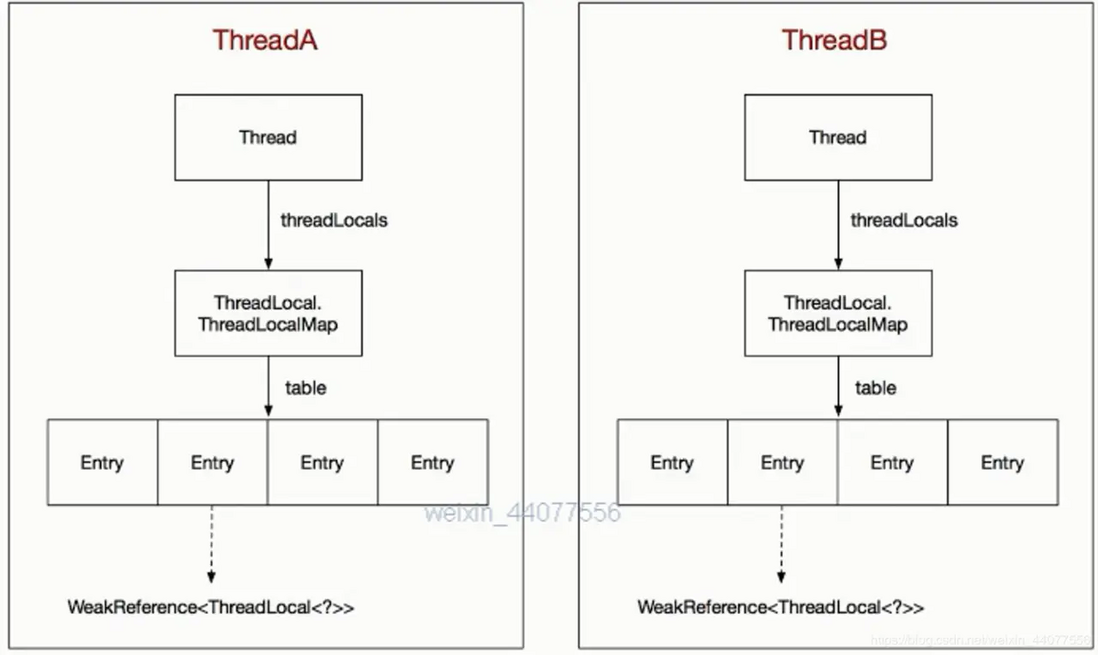
比如以下场景:模拟服务器处理两个用户信息。
package Four_ThreadLocal;

import java.util.ArrayList;
import java.util.Collections;
import java.util.concurrent.ExecutorService;
import java.util.concurrent.Executors;

import com.sun.xml.internal.bind.v2.schemagen.xmlschema.List;

public class Thread_ThreadLocal {

    public static void main(String[] args) {
        simtest();
    }

    private static void simtest() {
        // TODO Auto-generated method stub
        ExecutorService newFixedThreadPool = Executors.newFixedThreadPool(2);
        newFixedThreadPool.submit(()->{
            Long userId =   1000L;
            douserReq(userId);
        });

        newFixedThreadPool.submit(()->{
            Long userId =   2000L;
            douserReq(userId);
        });
    }

    private static void douserReq(long userId) {
        // TODO Auto-generated method stub
        UserSessionContext.getUserSessionContext().setUserId(userId);
        //获取当前进程信息
        String info = getMyCourses();
        System.out.println(Thread.currentThread().getName()+"的信息是:"+info);

        UserSessionContext.removeContext();
    }

    private static String getMyCourses() {
        // TODO Auto-generated method stub
        return UserSessionContext.getUserSessionContext().getUserId()+"信息";
    }

    public static class UserSessionContext{
        private static ThreadLocal<UserSessionContext> threadLocal =
                ThreadLocal.withInitial(UserSessionContext::new);
        private Long UserId;

        public Long getUserId() {
            return UserId;
        }
        public void setUserId(Long userId) {
            System.out.println(Thread.currentThread().getName()+"记录:"+userId);
            this.UserId = userId;
        }

        public static UserSessionContext getUserSessionContext() {
            return threadLocal.get();
        }
        public static void removeContext() {
            threadLocal.remove();
        }
    }
}
将两个线程的信息利用UserSessionContext存储到ThreadLoca对应的ThreadLocalMapl中,线程信息获取时调用Thread.get,获取当前线程的信息通过Threadmap匹配到内容,就将该线程的内容准确的调取出来了,结果展示如下: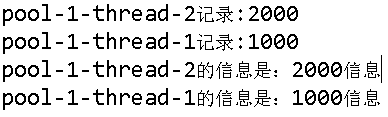
以上过程可知某线程内容全部有ThreadLocal的Threadmap托管,如果线程内容过大则很容易造成OOM问题,如何避免OOM问题呢?有以下两点:一、及时使用ThreadLocal.remove移除存储在ThreadLocalMap中不需要的线程信息,二、尽量保存较小数据在ThreadLocal中。
评论
登录后参与技术讨论,分享你的经验与见解。
登录 / 注册暂无评论