MIT6.824 Raft实现

文章目录
概述
本文是与MIT6.824 Lab2 Raft的实现有关。但笔者并不想按照Part A/B/C 来分别给出对应的代码实现,而是与figure2一一对应,给出实现的思路。实现的方式有很多种,在实现过程中,每个人遇到的bug与处理方式也各有不同。希望笔者的实现,对于读者修改代码有所帮助。笔者代码已全部通过测试,并且对于Part B的Backup和Part C的Figure8Unreliable,均测试300次,无错。测试脚本如下:
#!/bin/bash
for ((a=1, b=100; a<=300; a++))
do
        echo ".............................index = $a"
        #go test -run 2B > ./test_res/test_$a.txt
        go test -run TestFigure8Unreliable2C  > ./test_res/test_$a.txt
done
测试通过: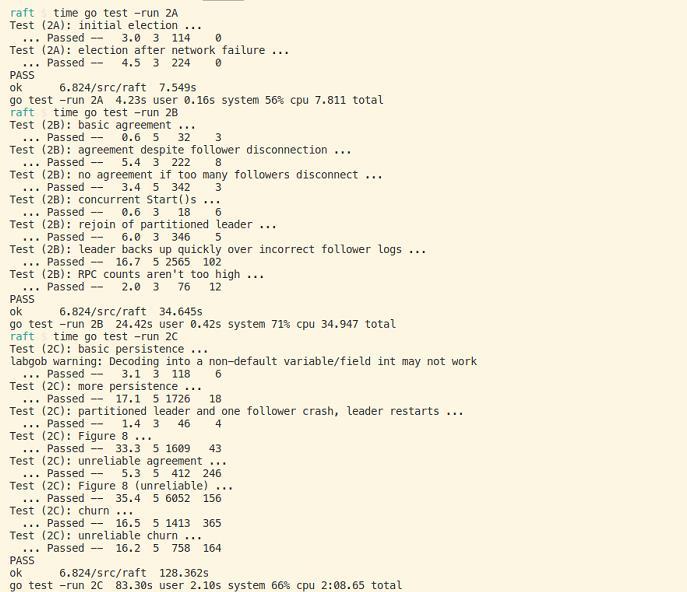
提示
- faithfully following Figure 2!
- 反复、认真阅读Students' Guide to Raft,Figure 2屏蔽了太多实现细节,会引导读者理所当然地加入自己的想法,而做不到第一步,所以学生指导手册很重要!
Raft的五大特性
- Election Safety :一个时期最多一个leader。
- Leader Append-Only : leader只添加日志,不重写或删除日志。
- Log Matching : 当两份日志在同一个index上的term相同时,index之前的日志也相同。
- Leader Completeness :如果一个日志条目在某个时期被提交,那么这个日志条目会出现在往后的term的leader日志里面。
- State Machine Safety :如果一个服务器apply了某个index位置的日志条目,那么其他的服务器在同一个index上不能apply其他的日志。
代码实现
整体设计,整体代码主要通过channel+timer定时器,去响应事件的发生。
func (rf *Raft) startLoop() {
    for {
        select {
        case <- rf.deadChan:       // 如果调用Kill()函数,会发送一个chan给主循环,然后主循环退出。
            return
        default:
            switch rf.state {        // 0 follower / 1 candidate / 2 leader
            case 0:
                select {
                case flag := <- rf.appendChan:      //  1
                    if flag {
                        rf.resetTimer()
                    }
                case flag := <- rf.voteChan:    // 2
                    if flag {
                        rf.resetTimer()
                    }
                case <- rf.timer.C:
                    rf.changeState(1)
                    rf.startElection()
                }
            case 1:
                select {
                case flag := <- rf.appendChan:  // 3
                    if flag {
                        rf.changeState(0)
                        rf.resetTimer()
                    }
                case <- rf.timer.C:
                    rf.startElection()
                default:
                    if rf.votedCount > len(rf.peers)/2 {
                        rf.mu.Lock()
                        for i, _ := range rf.peers {
                            if i != rf.me {
                                rf.nextIndex[i] = rf.log[len(rf.log)-1].Index+1
                                rf.matchIndex[i] = 0
                            }
                        }
                        rf.changeState(2)
                        rf.mu.Unlock()
                    }
                }
            case 2:
                rf.broadcastAppendEntries(rf.currentTerm)
                go rf.updateCommited()   // 提交
                time.Sleep(HeartbeatInterval) // HeartbeatInterval 为100毫秒
            }
        }
    }
}
注释中有三个点需要注意的,笔者分别标注了1、2、3。先来看Figure2原文
If eletion timeout elapses without receiving AppendEntries RPC from current leader or granting vote to candidate: convert to candidate.
If AppendEntries RPC receiving from new leader: convert to follower.
- 收到当前leader的AppendEntries RPC或者同意给candidate投票时,才重置定时器。
- 当candidate收到来自新的leader的RPC时,才转换回follower。
这两个点很重要,笔者一开始实现以偏概全,只要收到RPC就重置了时间,结果测试300次Figure8Unreliable的时候出现少些fail to reach agreement的错误。
接着来看投票,RequestVote RPC。
type RequestVoteArgs struct {
    Term int
    CandidateId int
    LastLogIndex int
    LastLogTerm int
}
type RequestVoteReply struct {
    Term int
    VoteGranted bool
}
func (rf *Raft) RequestVote(args *RequestVoteArgs, reply *RequestVoteReply) {
    rf.mu.Lock()
    defer rf.mu.Unlock()

    if args.Term < rf.currentTerm {   // Reply false if term < currentTerm,并要返回当前term。
        reply.Term = rf.currentTerm
        reply.VoteGranted = false
        rf.sendChannel(rf.voteChan, false)
        return
    } else if rf.currentTerm < args.Term {  // 当收到更高的term的RPC,修改当前term,并重置投票。
        rf.votedFor = -1
        rf.currentTerm = args.Term
        rf.persist()
        rf.changeState(0)
    }
    if rf.votedFor == -1 || rf.votedFor == args.CandidateId {
        if args.LastLogTerm > rf.log[len(rf.log)-1].Term ||
                    (args.LastLogTerm == rf.log[len(rf.log)-1].Term &&
                        args.LastLogIndex >= rf.log[len(rf.log)-1].Index) { // If votedFor is null or candidateId, and candidate's log is at least as up-to-date as receiver's log, grant vote
            rf.votedFor = args.CandidateId
            rf.persist()
            reply.VoteGranted = true
            reply.Term = -1
            rf.sendChannel(rf.voteChan, true)
            return
        }
    }
    reply.VoteGranted = false
    reply.Term = -1
    rf.sendChannel(rf.voteChan, false)
}
up-to-date在论文给出解释。
- 如果两份日志最后条目的任期号不同,那么任期号更大的日志更新。
- 如果两份日志最后条目的任期号相同,那么日志更长的更新。
选举代码如下
    rf.mu.Lock()
    rf.currentTerm++ // Increment currentTerm
    rf.votedFor = rf.me        //vote for self
    rf.mu.Unlock()
    rf.persist()
    rf.resetTimer() // Reset election timer
    LastLogIndex := rf.log[len(rf.log)-1].Index
    LastLogTerm := rf.log[len(rf.log)-1].Term
    args := RequestVoteArgs{rf.currentTerm, rf.me, LastLogIndex, LastLogTerm}
    rf.votedCount = 1 // 计算自己的票
    // Send RequestVote RPCs to all other servers
    for i, _ := range rf.peers {
        if i != rf.me {
            go func(server int) {
                reply := RequestVoteReply{}
                if rf.state == 1  && rf.sendRequestVote(server, &args, &reply){
                    rf.mu.Lock()
                    if rf.currentTerm == args.Term {   // 1
                        if reply.VoteGranted {     // 收到赞同票,票数加一
                            rf.votedCount += 1
                        } else {
                            if reply.Term != -1 {    // 如果当前term小于reply的term,修改,并convert to follower
                                rf.currentTerm = reply.Term
                                rf.votedFor = -1
                                rf.persist()
                                rf.changeState(0)
                            }
                        }
                    }
                    rf.mu.Unlock()
                }
            }(i)
        }
    }
}注释1很重要,笔者在debug(肉眼看print)的过程中,发现一种场景。3个serverA、B、C。B发起投票,A投赞同,C投反对。B重复投票几轮下来,B成了leader。两次投票中,假如A的投票回复延迟了,就会导致第二轮收到两个A的赞同票,从而B变成了leader。当然此错误与整体实现有关,如若读者有相同错误,可以借鉴。AppendEntries RPC和broadcastAppendEntries(广播RPC)。这两处代码与Figure2有些出入,主要对nextIndex做了优化。Figure2原文:
If AppendEntries fails because of log inconsistency: decrement nextIndex and matchIndex for follower
如果只是对nextIndex进行递减,Figure8Unreliable是通过不了的。具体优化可以看学生指导手册,我也会给出我的具体实现。
type AppendEntriesArgs struct {
    Term int
    LeaderId int

    PrevLogIndex int
    PrevLogTerm int

    Entries []Entry
    LeaderCommit int
}

type AppendEntriesReply struct {
    Term int
    Success bool

    ConflictFirstIndex int     // 冲突时期的第一个条目
    ConflictTerm int    // 冲突时期
}

func (rf *Raft) AppendEntries(args *AppendEntriesArgs, reply *AppendEntriesReply) {
    rf.mu.Lock()
    defer rf.mu.Unlock()

    if args.Term < rf.currentTerm {  // Reply false if term < curremtTerm
        reply.Success = false
        reply.Term = rf.currentTerm
        rf.sendChannel(rf.appendChan, false)
        return
    }
    if args.Term > rf.currentTerm {
        rf.currentTerm = args.Term
        rf.votedFor = -1
        rf.changeState(0)
        rf.persist()
    }

    // Reply false if log doesn't contain an entry at prevLogIndex whose term matches prevLogTerm.
    if rf.log[len(rf.log)-1].Index < args.PrevLogIndex {
        // If a follower does not have`prevLogIndex`in its log,
        // it should return with`conflictIndex = len(log)`and`conflictTerm = None`

        reply.ConflictFirstIndex = len(rf.log);
        reply.ConflictTerm = -1
        reply.Success = false
        reply.Term = -1
        rf.sendChannel(rf.appendChan, true)
        return
    }
    if rf.log[len(rf.log)-1].Index >= args.PrevLogIndex && rf.log[args.PrevLogIndex].Term != args.PrevLogTerm {
        // If a follower does have`prevLogIndex`in its log, but the term does not match,
        // it should return`conflictTerm = log[prevLogIndex].Term`,
        // and then search its log for the first index whose entry has term equal to`conflictTerm`.

        reply.ConflictTerm = rf.log[args.PrevLogIndex].Term
        reply.ConflictFirstIndex = args.PrevLogIndex
        for i := reply.ConflictFirstIndex - 1; i >= 0; i-- {
            if rf.log[i].Term != reply.ConflictTerm {
                break
            } else {
                reply.ConflictFirstIndex -= 1
            }
        }
        reply.Success = false
        reply.Term = -1
        rf.sendChannel(rf.appendChan, true)
        return
    }

    // If an existing entry conflicts with a new one (same index but different terms), delete the existing entry and all that follow it
    // 笔者的实现并不算忠于Figure2,但笔者实现默认了PrevLogIndex之后的日志都是冲突日志,可以删除。故并无什么问题。
    if args.Entries != nil {  // 如果心跳非空
        // Append any new entries not already in log
        rf.log = rf.log[:args.PrevLogIndex+1]
        rf.log = append(rf.log, args.Entries...)
        rf.persist()
    }
    // If leaderCommit > commitIndex, set commitIndex = min(leaderCommit, index of last new entry)
    if args.LeaderCommit > rf.commitIndex {
        if args.LeaderCommit <= rf.log[len(rf.log)-1].Index {
            rf.commitIndex = args.LeaderCommit
        } else {
            rf.commitIndex = rf.log[len(rf.log)-1].Index
        }
        rf.updateApplied <- struct{}{}     // If commitIndex > lastApplied,发送channel,具体实现之后给出。
    }
    reply.Success = true
    reply.Term = -1
    rf.sendChannel(rf.appendChan, true)
}
func (rf *Raft) broadcastAppendEntries(thisTerm int) {
for i, _ := range rf.peers {
if i != rf.me {
go func(i int, term int) {
args := &AppendEntriesArgs{}
reply := &AppendEntriesReply{}
args.Term = rf.currentTerm
args.LeaderId = rf.me
args.LeaderCommit = rf.commitIndex
args.PrevLogIndex = rf.log[rf.nextIndex[i]-1].Index
args.PrevLogTerm = rf.log[rf.nextIndex[i]-1].Term
args.Entries = nil
// If last log index >= nextIndex for a follower: send AppendEntries RPC with log entries starting at nextIndex
if rf.log[len(rf.log)-1].Index >= rf.nextIndex[i] {
args.Entries = rf.log[rf.nextIndex[i]:]
}
var ok bool
if args.Term == term { // 防止term发生变化后,还发送RPC
ok = rf.sendAppendEntries(i, args, reply)
}
if ok {
if reply.Term != -1 {
rf.mu.Lock()
rf.currentTerm = reply.Term
rf.votedFor = -1
rf.persist()
rf.changeState(0)
rf.mu.Unlock()
}
if rf.state == 2 {
rf.mu.Lock()
if reply.Success {
if args.Entries != nil {
// If successful :update nextIndex and matchIndex for follower
rf.nextIndex[i] = args.Entries[len(args.Entries)-1].Index+1
rf.matchIndex[i] = args.Entries[len(args.Entries)-1].Index
}
} else {
// If appendEntries fails because of log inconsistency: decrement nextIndex and retry
nextIndex := rf.nextIndex[i]
rf.nextIndex[i] = rf.getNextIndex(*reply, nextIndex)
}
rf.mu.Unlock()
}
}
}(i, thisTerm)
}
}
}
// If there exists an N such that N < commitIndex, a majority of matchIndex[i] >= N,and log[N].term == currentTerm: set
// commitIndex = N
func (rf *Raft) updateCommited() {
rf.mu.Lock()
defer rf.mu.Unlock()
if rf.state == 2 {
N := rf.commitIndex
for i := rf.commitIndex+1; i <= rf.log[len(rf.log)-1].Index; i++ {
cnt := 1
for j, _ := range rf.peers {
if j != rf.me {
if rf.matchIndex[j] >= i && rf.log[i].Term == rf.currentTerm {
cnt++
}
}
}
if cnt > len(rf.peers)/2 {
N = i
}
}
if N > rf.commitIndex {
rf.commitIndex = N
rf.updateApplied <- struct{}{}
}
}
}
// If commitIndex > lastApplied : increment lastApplied, apply log[lastApplied] to state machine
func (rf *Raft) updatelastApplied() {
for {
select {
case <- rf.updateApplied:
rf.mu.Lock()
for rf.lastApplied < rf.commitIndex {
rf.lastApplied++
msg := ApplyMsg{true, rf.log[rf.lastApplied].Command, rf.lastApplied}
rf.applyCh <- msg
}
rf.mu.Unlock()
}
}
}最后是nextIndex的算法
func (rf *Raft) getNextIndex(reply AppendEntriesReply, nextIndex int) int {
    if reply.ConflictTerm == -1 {   // 当冲突位置没有日志的时候
        nextIndex = reply.ConflictFirstIndex
    } else {
        conflictIndex := reply.ConflictFirstIndex
        conflictTerm := rf.log[conflictIndex].Term
        if conflictTerm == reply.ConflictTerm {     // 在冲突的index, term相同,该term的最后一个Entry作为nextIndex
            for i := conflictIndex+1; i < nextIndex; i++ {
                if rf.log[i].Term != reply.ConflictTerm {
                    break
                }
                conflictIndex += 1
            }
            nextIndex = conflictIndex + 1
        } else if conflictTerm > reply.ConflictTerm {  // 在冲突的index, term > reply.ConflicTerm
            for i := conflictIndex; i > 0; i-- {    // 往前寻找,直到term == reply.ConflictTerm
                if rf.log[i].Term == reply.ConflictTerm {
                    break
                }
                conflictIndex -= 1
            }
            if conflictIndex == 0 {     // 如果日志没有reply.ConflictTerm
                nextIndex = reply.ConflictFirstIndex
            } else {
                nextIndex = conflictIndex+1
            }
        } else {    // conflictTerm < reply.ConflictTerm,并且必须往前搜索,所以一定找不到任期相等的entry
            nextIndex = reply.ConflictFirstIndex
        }

    }
    return nextIndex
}
对于Election Safety,我们要确保只有改变term的时候,才能改变votedFor,重置投票。
lab2Part C的实现很简单,只要currentTerm, votedFor, log,任何一个发生变化,都需要持久化。
剩余代码
func (rf *Raft) persist() {
// Your code here (2C).
w := new(bytes.Buffer)
e := labgob.NewEncoder(w)
e.Encode(rf.currentTerm)
e.Encode(rf.votedFor)
e.Encode(rf.log)
data := w.Bytes()
rf.persister.SaveRaftState(data)
}
func (rf *Raft) readPersist(data []byte) {
if data == nil || len(data) < 1 { // bootstrap without any state?
return
}
r := bytes.NewBuffer(data)
d := labgob.NewDecoder(r)
var currentTerm int
var votedFor int
var log []Entry
if d.Decode(¤tTerm) != nil ||
d.Decode(&votedFor) != nil ||
d.Decode(&log) != nil {
DPrintf("decode error")
return
} else {
rf.currentTerm = currentTerm
rf.votedFor = votedFor
rf.log = log
}
}
func (rf *Raft) sendChannel(channel chan bool, flag bool) {
go func() {
channel <- flag
}()
}
func (rf *Raft) Start(command interface{}) (int, int, bool) {
index := -1
term := -1
isLeader := true
// Your code here (2B).
rf.mu.Lock()
term, isLeader = rf.GetState()
if isLeader {
index = rf.log[len(rf.log)-1].Index+1
newLog := Entry{command, term, index}
rf.log = append(rf.log, newLog)
rf.persist()
}
rf.mu.Unlock()
return index, term, isLeader
}
func (rf *Raft) Kill() {
rf.deadChan <- struct{}{}
rf.deadChan <- struct{}{}
}
func (rf *Raft) changeState(nState int) {
rf.state = nState
}
func (rf *Raft) resetTimer() {
rf.timer.Reset(randTimeDuration(ElectionTimeoutLower, ElectionTimeoutUpper))
}
func randTimeDuration(lower, upper time.Duration) time.Duration {
num := rand.Int63n(upper.Nanoseconds()-lower.Nanoseconds()) + lower.Nanoseconds()
return time.Duration(num) * time.Nanosecond
}
func Make(peers []*labrpc.ClientEnd, me int,
persister *Persister, applyCh chan ApplyMsg) *Raft {
rf := &Raft{}
rf.peers = peers
rf.persister = persister
rf.me = me
// Your initialization code here (2A, 2B, 2C).
rf.applyCh = applyCh
rf.currentTerm = 0
rf.votedFor = -1
rf.state = 0
first := Entry{nil, 0, 0}
rf.log = append(rf.log, first)
rf.commitIndex = 0
rf.lastApplied = 0
rf.timer = time.NewTimer(randTimeDuration(ElectionTimeoutLower, ElectionTimeoutUpper))
rf.voteChan = make(chan bool)
rf.deadChan = make(chan struct{},2)
rf.appendChan = make(chan bool)
rf.updateApplied = make(chan struct{})
for i := 0; i < len(rf.peers); i++ {
rf.nextIndex = append(rf.nextIndex, 0)
rf.matchIndex = append(rf.matchIndex, 0)
}
// initialize from state persisted before a crash
rf.readPersist(persister.ReadRaftState())
go rf.startLoop()
go rf.updatelastApplied()
return rf
}不过一千人有一千种实现方法,遇到的问题也各有不同,良好的设计能事半功倍。用来调试,思考的时间远多于写代码的时间。
在整个过程中,应不断提醒自己faithfully following Figure 2, 和反复阅读Students' Guide to Raft。
评论
登录后参与技术讨论,分享你的经验与见解。
登录 / 注册暂无评论