JS原型以及类

文章目录
类与原型
class Person {
    constructor(x,y) {
        this.x = x
        this.y = y
    }
    add() {
        return this.x + this.y
    }
}
let person = new Person(1,2)
console.log(person.add()) // 3通过类Person的构造函数实例化了一个对象person,person继承了类的add方法
ES6之前是没有类的概念,所以要实现上面的操作,需要function出马
function Person(x, y) { // 首字母大写表示它是个类函数
    this.x = x
    this.y = y
    this.add = function() {
        return this.x + this.y
    }
}
let person = new Person(1,2)
console.log(person.add()) // 3这样虽然实现了,但是明显有缺点,上面ES6类的构造函数仅初始化了x,y,默认继承了add方法,而function方式的需要初始化所有,所以需要优化
function Person(x, y) {
    this.x = x
    this.y = y
}
Person.prototype.add =  function() {
    return this.x + this.y
}
let person = new Person(1,2)
console.log(person.add()) // 3很明显,通过Person.prototype实现了class中this的作用,这就叫实例原型(实例对象本身就是从类实例化而来,可不就是实例原型)
既然与ES6 class挂上了钩,这时还缺少一个constructor,巧了,实例原型恰好有一个属性constructor指向构造函数本身
而且为了形成一个闭环,实例对象也有一个属性__proto__指向实例原型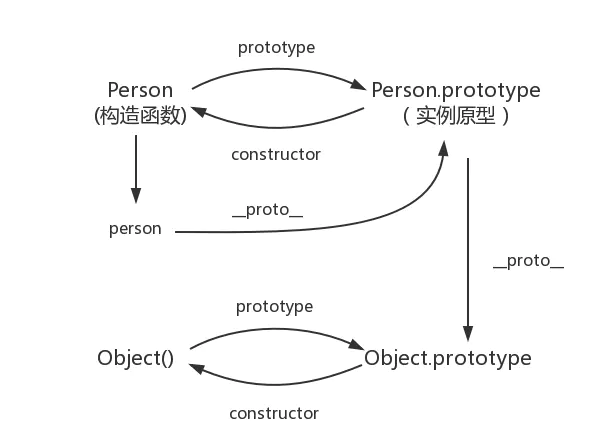
因为所有对象都继承于Object,所以会有下面的一部分继承
ES6 继承
class Father{
    constructor(name,age) {
        this.name = name
        this.age = age
    }
    // 此处的方式其实是挂载在prototype属性上的,反推上面的ES5 语法
    sayName() {
        console.log(this.name + this.age)
    }
}
class Child extends Father{
    constructor(name, age, job) {
        super(name,age) // 必须调用super方法,并且一定要在使用this之前调用,相当于Father.prototype.constructor.call()
        this.job = job
    }
    sayJob() {
        console.log(this.job)
    }
    // 覆盖父类的方法
    sayName() {
        console.log('hello world') // 调用父类的属性,输出:hello world
    }
}
let kid = new Child('nike','20','teacher')
kid.sayJob()  // teacher
kid.sayName() // hello world其中的关键是super,super作为一个方法在调用父类的构造函数,同时也可以作为一个对象,指向父类的prototype对象,而上面的调用父类属性会出现undefined,因为name并没有挂载在父类的prototype上,重新改造一下
class Father{
    constructor(name,age) {
        Father.prototype.name = name
        this.age = age
    }
}因为sayName方法是挂载在prototype属性上的,所以可以直接super.sayName()调用,而且调用方法执行的上下文this是指向子类的
class Father{
    constructor(name,age) {
        this.name = name
        this.age = age
        this.job = 'Hello world'
    }
    sayJob() {
        console.log(this.job)
    }
}
class Child extends Father{
    constructor(name, age, job) {
        super(name,age) // 必须调用super方法,并且一定要在使用this之前调用
        this.job = job
    }
    sayJob() {
        super.sayJob() // teacher
    }
}
let kid = new Child('nike','20','teacher')
kid.sayJob()  // teacher
原型链继承
从上面的分析可知,xxx.prototype作为实例原型,它拥有跟实例对象一样的属性和方法,所以只需要把父类的实例对象赋值给子类的prototype属性,那么不就继承了
function Father(name) {
    this.name = name
}
function Child(age) {
    this.age = age
}
Child.prototype = new Father('nike') // 将父类的实例对象赋值给Child的prototype
let kid = new Child(20) // 实例子类对象
console.log(kid.name) // nike
console.log(kid.age) // 20
构造函数继承
因为ES5的类是个函数,所以借助函数的特性可以实现另外一种继承
function Father(name) {
    this.name = name
}
function Child(age) {
    Father.call(this, 'nike')
    this.age = age
}
let kid = new Child(20)
console.log(kid.name) // nike
这两个就够了,其他方式都是画蛇添足
判断一个对象是否另一个对象的原型
person instanceof Person  // true
person instanceof Object  // true
Person.prototype.isPrototypeOf(person) // true
Object.prototype.isPrototypeOf(person) // true
评论
登录后参与技术讨论,分享你的经验与见解。
登录 / 注册暂无评论